
Home > Metal Hardness Tester
Metal Hardness Tester
Products
Did you know only understanding the hardness testing method is not enough, adequate equipment is also important. A metal hardness tester is an instrument used to measure the hardness of any metal in the process of hardness testing. Hardness testers for metal are routinely used in the manufacturing industry. In this article, we will discuss some main and widely-used metal hardness testers.
Metal Hardness Tester
-

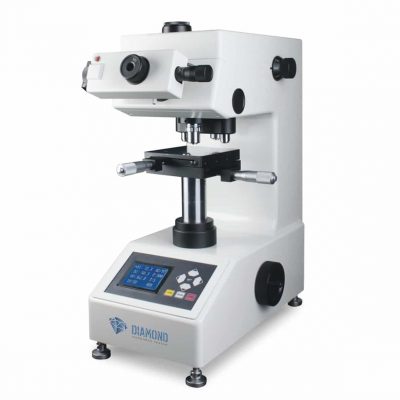
Vickers Hardness Tester IVH06
$50.00 Add to cart -
Rockwell Hardness Tester MRH07
$50.00 Add to cart -
Macro Vickers Hardness Tester SVH05
$50.00 Add to cart -
Leeb hardness tester LH02
$50.00 Add to cart -
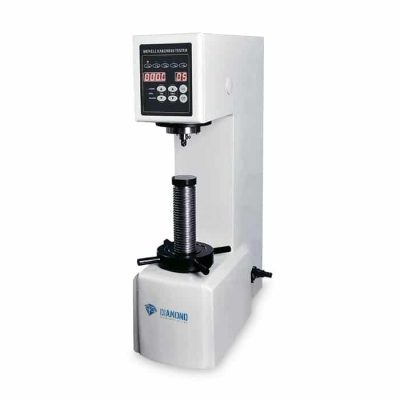
Electronic Brinell Hardness Tester ABH05
$50.00 Add to cart -
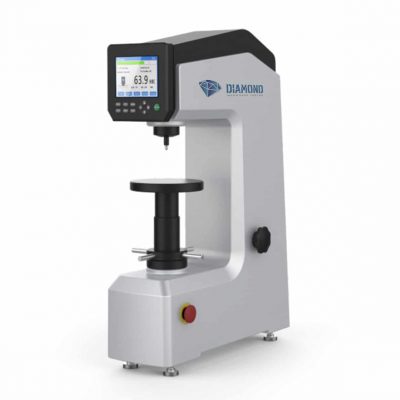
Digital Rockwell Hardness Tester TRH06
$50.00 Add to cart


Why Global Clients Choose Us?
25 Years of Expertise
We have 25 years of experience in the professional production of hardness testing devices, an annual output of more than 10,000 hardness testers.
Talented Engineers and support team
As of September 2020, we have a total of 125 employees, including nearly 35 professional and technical workers who are masters or doctorate degree holders.
Advanced production equipment
We have Complete machining workshop, CNC, CNC machine tools, and more than 50 other types of processing equipment,to ensure high-precision product parts.
Excellent After-Sales Service
We provided excellent after-sales service, including fast delivery, online training, immediate feedback of trouble shotting.
Welcome to Visit us Anytime


Questions on Metal Hardness Tester
1. How do you Test the Hardness of Metal?
The metal’s hardness can be tested by two main methods: scratch and indentation testing methods.
Scratch testing
Scratch testing is used to check the hardness of brittle and inelastic materials, for example, ceramics. Moh’s hardness scale is applied here in which hardness is determined by ranking the material according to the list of standard materials whose hardness is already known.
Indentation testing
The indentation testing method is used for materials that deform themselves, for example, metals or thermoplastic polymers. This method is further divided into several testing methods, such as the Brinell test, the Rockwell test, or the Vickers test. All three methods assess the hardness by measuring the depth value of the object caused by the creation of indentation due to the test force applied to the testing element.
2. Categories of Metal Hardness Tester
Rockwell Hardness Tester
Rockwell hardness testers measure hardness through the depth of the indentation caused due to minor force and then through the major load. This test is mainly used for quality checks of alloys such as steel and some plastics. Rockwell hardness test is the most widely used test. The scales they use vary according to the combinations of penetrators and charges used. Its hardness scale is represented by a letter of the alphabet: A, B, C, D, E, F, G, H, and K. The surface value is determined by a number that represents the highest applied load and a letter: N, T or W.
Vickers Hardness Tester
The tests carried out with Vicker hardness testers have the objective of making the materials resist plastic deformation. The test can be used for all types of metals. The intender used here is a small square-based diamond pyramid. Since loads range from 1 to 1000kgf, these testers are considered to measure microhardness and also for macro hardness. The test is performed by applying a specified load force on the indenter for a specific time (10 -30 seconds). The hardness is then calculated with the help of the standard Vickers formula.
Brinell Hardness Tester
The Brinell hardness tester measures the hardness of material whose surface is rough or very coarse. The indenter used here is a carbide ball. Generally, an indenter is pushed inside the sample with a specified and controlled force for a limited time. This application of force creates the round shape indentation in the sample object. Then the diameter of the indentation is measured to produce the value of hardness with the help of the standard formula of the Brinell hardness testing method.
Leeb Hardness Tester
Leeb hardness tester is used for nondestructive tests and can measure the hardness of metal materials without destroying it. These tests are dynamic in nature. The hardness results obtained can be translated into traditional scales such as Rockwell with which a better understanding of the results can be obtained.
3. What is a Quick and Simple Method to Test for Metal Hardness?
According to the standard ASTM and common experience, the Rockwell Hardness test is known as the quickest and simple method for testing the hardness of metals. The test is easy to perform and the results are more accurate than any other hardness test.
The process is small and less time taking as no further inspection with optical devices is needed. You just need to find the difference between the depth caused by indentation of minor load force and indentation through major load on the test material surface.
To conclude, there are different types of hardness testers. According to the various families of materials, there is the possibility of measuring the hardness of different metallic materials, such as cast iron, aluminum alloys, copper and bronze, quickly and accurately. Above all, these hardness testers are particularly appreciated in the fields of production, quality control and technical service. To know more about hardness testing methods and their equipment, visit our website.